Jan 29, 2026
CGM in the scan room? Radiation Sciences grad’s research details what’s safe
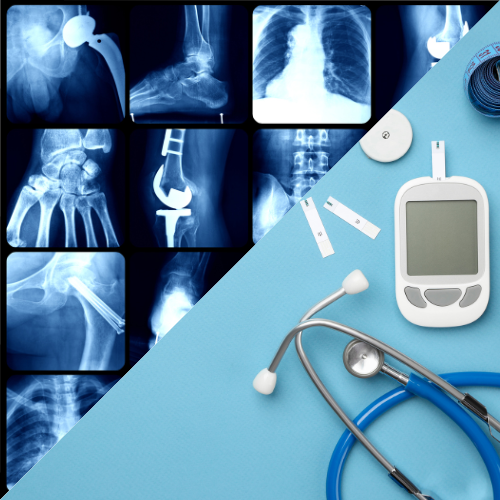
A casual comment from a patient before an X-ray led Brittany Gundersen to take a deep-dive into a largely unexplored issue in radiologic science.
“The patient mentioned that they needed to take off their Dexcom continuous glucose monitor (CGM) because they’d been told they couldn’t wear one during X-rays,” said Gundersen, who at the time was studying for her B.S. in Clinical Radiation Sciences and working at the Orthopaedic and Spine Center of Newport News (OSC).
The comment struck Gundersen as odd: She wasn’t aware that CGMs had been established as devices that weren’t X-ray-friendly. Some time later, a second patient mentioned removing their CGM before an X-ray. “At this point, I became curious and wanted to make sure that our office was up to date on these devices,” Gundersen said.
That curiosity would ultimately lead Gundersen – now a full-time radiographer at OSC – to devote her senior project at Virginia Commonwealth University’s Department of Radiation Sciences to studying the safety of wearing CGMs during diagnostic imaging. Under the guidance of department Chair Jeff Legg, Ph.D., her investigation culminated in a peer-reviewed paper in Radiologic Technology, exploring the intersection of medical imaging, radiation exposure and device integrity.
Gundersen’s research underscores the significance of this emerging topic. Millions of Americans manage their diabetes with CGMs, wearable sensors that continuously track glucose levels through the skin without finger sticks. These devices, typically worn on the arm or abdomen, contain tiny metallic components and electronic transmitters that can interact with imaging modalities, including X-ray, CT and MRI.
In her study, Gundersen reviewed existing literature and manufacturer guidance across all three modalities. She found that CGMs don’t encounter interference or pose safety concerns to patients undergoing X-ray or CT imaging. Though CGMs can cause artifacting or distortions on an X-ray or CT image, limiting diagnostic information, they are still considered safe to wear during the procedure.
Meanwhile, the powerful magnetic fields and radiofrequency waves associated with MRI can heat up the metal components in a CGM and burn the wearer. MR can also cause a CGM to malfunction and display inaccurate glucose levels.
Gundersen’s findings align with a 2021 Journal of Diabetes Science and Technology article, which found that Dexcom G6 CGMs maintained their data and functionality even under radiation exposures far higher than typical diagnostic levels. Yet Gundersen emphasizes that safety protocols must continue to err on the side of caution – particularly in MRI environments, where electromagnetic fields and heating can pose real risks.
The project was assigned as part of a three-course sequence designed to help students learn about the basics of research, develop critical thinking and communication skills and delve deeper into a topic of interest. Gundersen’s paper exemplified how the Radiation Sciences curriculum blends classroom theory with real-world problem-solving. “Dr. Legg helped me immensely,” she said. “We came up with questions for me to answer myself during the research process, and, with those, I steadily came up with new questions.”
For Gundersen, the most meaningful outcome has been applying what she learned directly to patient care. “I’m well-versed at explaining to the patient why they don’t need to remove their CGM for an X-ray vs. an MRI,” she said. She’s also working with colleagues to ensure scheduling staff educate patients on bringing extra sensors for scans that require removal.
Her advice for future students tackling their own senior projects: “Ask all the questions you need to be able to feel confident in your writing. It may take longer to do it that way, but in doing so I gained a deeper understanding of every part of this senior project.”