Feb 26, 2026
Radiography study abroad programs offer global perspective on medical imaging
Short-term international experiences connect history, culture and clinical practice for students
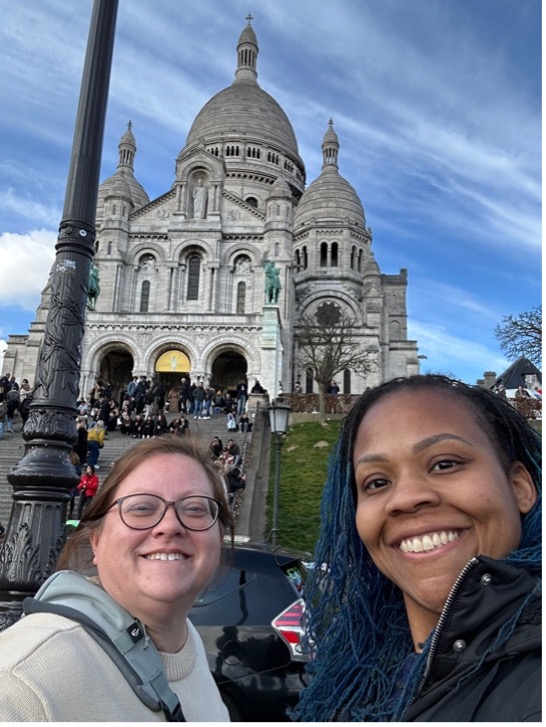
Students in the Radiography program will soon have two distinct opportunities to expand their education beyond the classroom through immersive, short-term study abroad experiences.
Led by faculty in the Department of Radiation Sciences, the upcoming programs include a spring break trip to Germany and France focused on the history of medical imaging, followed by a May excursion to Italy that explores anatomy, pathology and Renaissance art through a radiographic lens.
Now entering its third iteration, the spring break trip was developed to give students a deeper understanding of how their profession began – and why that history still matters. Parham led it for the first two years; this March, Radiography faculty members Jessica Koroma, M.Ed., RT(R)(VI), and Heidy Palacios, M.B.A., will take over.
“Traveling to Germany and France for the first time alongside our students makes this experience even more special,” Palacios said. “I’m excited to explore the roots of radiologic and nuclear medicine while immersing ourselves in new cultures and helping our students grow with confidence along the way.”
The itinerary includes Cologne and Remscheid, Germany, the latter being home to the Röntgen Museum, dedicated to Wilhelm Röntgen and the discovery of X-rays. Later, students will visit Paris to tour the Curie Museum and the original laboratories of Marie and Pierre Curie.
“History is important to understand when it comes to the discovery of how harmful radiation can be,” said Radiography Program Director Cherish Parham, Ph.D., RT(R)(M). “Early radiation scientists didn’t know it was dangerous, and some suffered because of their studies.” Marie Curie’s death in 1934 is attributed to her radium exposure; she and her husband, Pierre, are buried in lead-lined coffins due to their remains’ radioactive status.
The trip also will feature experiential anatomy learning, including a guided visit to the Paris Catacombs, an underground network of over 6 million graves. There, students can observe skeletal structures and visible pathologies in a historical context. Faculty-led instruction is balanced with independent exploration, allowing students to navigate major European cities and build confidence as travelers.
Following the spring program, Parham will lead a new study abroad experience to Florence and Rome in May. This trip to Italy will blend radiographic pathology with Renaissance art, examining how disease and anatomy were depicted long before modern imaging existed.
The May program was inspired by something Parham discovered while traveling to Italy as a liberal arts student. “I found out that there was a statue by Michelangelo which experts say realistically depicts a woman with breast cancer,” she said. “I started researching, and it turns out there’s a lot of art out there that makes similar depictions.”
Designed specifically for students in highly structured health sciences programs, both study abroad options are short-term, weeklong experiences that fit within demanding curricula. Beyond academic enrichment, the trips offer personal and professional growth that carries back into the clinic.
“Having students traverse the European train system and conduct themselves in an environment where they don’t speak the language brings confidence and gives them a little bit of a boost,” Parham said. “Those kinds of culture-clash experiences definitely translate into the clinic.”