Jun 5, 2026
Rethinking how future lab technicians connect what they learn
In the VCU Medical Laboratory Sciences program, innovation goes beyond the lab into how students are mastering the material.
Through a growing focus on the scholarship of learning, faculty are studying, testing and refining new ways to teach complex science – ensuring students don’t just absorb information, but truly understand and apply it.
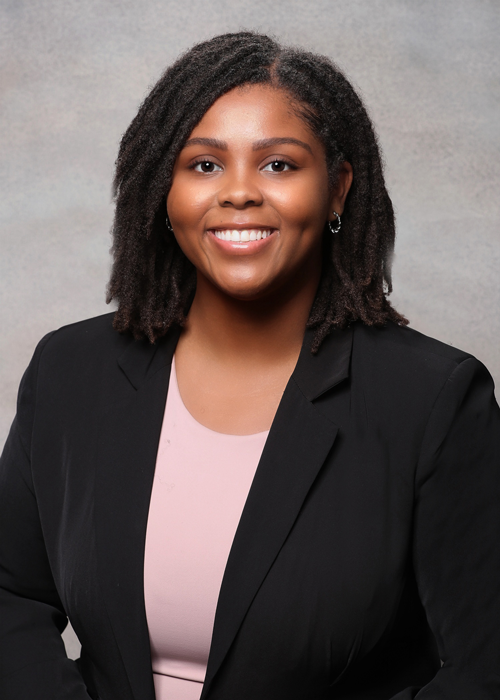
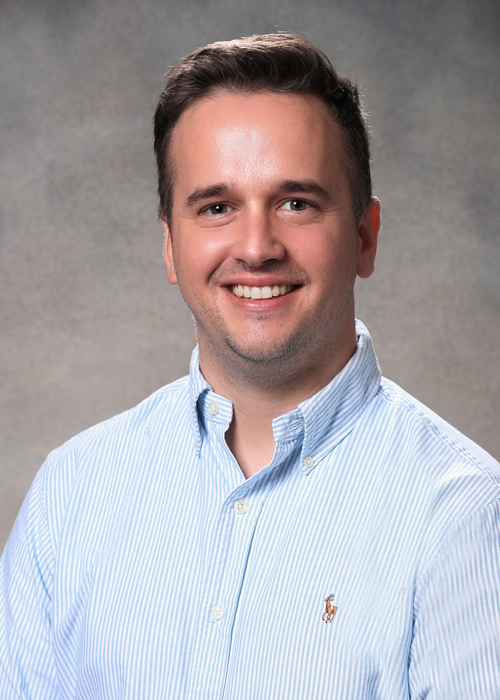
For Maiya Lee and Michael Lacy, that work starts with a shared challenge of helping students connect concepts that are both invisible and interdisciplinary.
Lee observed students struggling with the program’s clinical qualifying exam, a VCU-specific assessment they take a month or two after their junior year classes end. This is a critical step before they advance to clinical placements in their senior year.
“Students were taking multiple attempts to pass,” she said, recognizing that the time between demonstrating mastery of concepts in the lab and the exam was creating a recall gap for students.
At the same time, Lacy saw students struggling to grasp foundational molecular concepts.
“You can draw it, you can describe it – but for many students, that’s still not enough,” he said.
Connecting knowledge across disciplines
MLS coursework is typically taught in silos, such as chemistry, microbiology, hematology and urinalysis. Students often learn each subject well yet struggle to integrate them.
“If I talk about diabetes in chemistry, students think about it one way. In urinalysis, they think about it another way – even though it’s the same disease,” said Lee, Ph.D., who oversees all lab instruction in the program.
As part of her dissertation – and her commitment to the scholarship of learning – Lee developed a two-hour, case-based lab session designed to bring those disciplines together. Her goal was to better prepare them for the qualifying exam, which requires students to pass each of six sections on their way to an overall passing mark.
Launched this year, the program assigns students in groups to solve realistic patient cases using lab data and prepared samples, moving across subject areas to reach a diagnosis. “This is a hands-on, lab-related review session that helps them recall concepts, including those they might not have seen in a while,” she said.
Cases range from sickle cell crises to infections progressing to kidney failure, requiring students to integrate microbiology, chemistry and urinalysis. Students then present their findings, reinforcing both knowledge and communication skills, which provides a refresher on those lab components for their peers.
Because Lee approached the lab as research – not just instruction – she measured its impact.
Student feedback was one of the strongest outcomes. Participants described the session as engaging and mentally challenging, pushing them to think differently. “They said it stimulated a different part of their brain,” Lee said.
Early results also show improved performance in key subject areas for students who participated. Just as important, the work revealed a broader opportunity for more intentional integration across the curriculum.
Making science tangible
Lacy’s work reflects the same philosophy of using the scholarship of learning to rethink how students grasp complex ideas.
In courses like immunology, where concepts are inherently invisible, he uses 3D printing to create molecular models that students can physically manipulate. Some are embedded with magnets to simulate how biological structures bind and interact.
“It creates a kind of trial-and-error learning,” said Lacy, Ph.D., assistant professor. “Students can feel when something works and when it doesn’t.”
The models make abstract concepts more intuitive, while also expanding access by allowing the program to produce materials at low cost for every student.
Commercial models are expensive, with limited selections. MLS secured a grant from the Commonwealth Transfusion Foundation to invest in a 3D printer, which allows faculty to produce the exact structures they need to teach specific concepts.
From understanding to application
Together, these approaches are reshaping how MLS students learn at VCU.
Lacy’s work helps students understand the “why.” Lee’s work connects knowledge across disciplines in ways that mirror real clinical practice. Both are grounded in the idea that teaching itself can and should be studied, improved and innovated.
“I want students to get the most out of this program,” Lee said. “So they can become stronger laboratory scientists and enter the workforce prepared.”