Jan 23, 2026
Rewriting the story of heart disease, one immune cell at a time
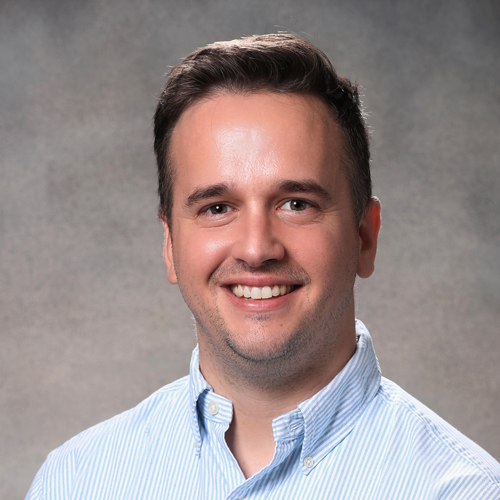
When most people think about heart disease, they picture clogged arteries and “bad” cholesterol. Michael Lacy thinks about the immune system.
“Cardiovascular disease looks a lot like an autoimmune condition,” said Lacy, Ph.D., MLS(ASCP)CM, assistant professor in VCU’s Medical Laboratory Sciences Department. “Your immune system starts treating your own cholesterol like an invader, and it doesn’t know how to stop.”
His research explores this mistaken attack, with a special focus on T cells, which are tiny white blood cells that normally help us remember and fight infections. But in heart disease, these cells can become harmful, adding fuel to the inflammation that causes heart attacks and strokes. Lacy wants to know why that shift happens, and whether we can gently calm down those T cells.
Understanding Lacy’s research starts with a basic picture of two functions within the immune system. Your body’s first responder is innate immunity, whose cells react quickly to anything unfamiliar; they don’t care what it is, only that it shouldn’t be there. Adaptive immunity is slower and more strategic, and cells – including T cells – learn to recognize specific threats and remember them for life.
In atherosclerosis, which is the buildup of plaque that causes heart attacks, these two systems synergize.
When cholesterol gets stuck inside an artery wall, innate immune cells rush in to clean it up, trying to “eat” the cholesterol. But the job turns out to be impossible. Innate mmune cells get trapped, inflamed and overwhelmed, and they call in the adaptive immune system as reinforcements. After being presented with the invader, T cells now view it as a dangerous pathogen and attack.
“They’re doing exactly what they’re designed to do,” Lacy said. “But in this context, their good intentions make the disease worse.”
Training T cells to behave differently
Fortunately, T cells are surprisingly flexible and can shift between many “personalities,” or phenotypes, depending on what signals they receive. Some phenotypes are calming and protective; others drive inflammation.
Lacy seeks to understand what pushes T cells toward one direction or the other – and whether scientists can safely guide them toward anti-inflammatory behavior.
This means studying epigenetics, the layer of chemical instructions that influences which genes turn on or off without altering DNA itself. If DNA is the script, epigenetics is the stage manager telling actors when to step forward or stay quiet.
“Sometimes the genes that push T cells toward inflammation are ‘open’ and easy to read,” Lacy said. “If we can close those down or open up more helpful genes, we might be able to reduce harmful inflammation in cardiovascular disease.”
Of course, that comes with challenges. If a therapy dampens the immune system too broadly, patients become vulnerable to infection. The power of Lacy’s work lies in its precision, meaning that future treatments could act specifically on the problematic cells inside arteries without disrupting the rest of immune function.
It’s early-stage science, but it is the foundation on which real therapies can someday be built.
Lessons from Germany, big questions at VCU
Lacy’s interest in cardiovascular immunology began in Munich, where he helped launch a new research lab focused on inflammation. There, he became fascinated by cytokines, the chemical messengers immune cells use to communicate. One cytokine in particular, interleukin-4, caught his attention.
“Interleukin-4 is like a double-edged sword,” he says. “It can calm inflammation in some places but cause asthma when overactive in the lungs. The context matters.”
That complexity is exactly why cardiovascular disease needs more than cholesterol-lowering drugs. Statins save lives, but inflammation still drives much of the remaining risk. Lacy is working to close that gap.
Although Lacy’s work is basic science, not clinical testing, the laboratory techniques he uses are the same ones MLS students use in hospital labs, which makes his research an ideal training ground. Those students are supporting his research with two tests in particular.
ELISA (Enzyme-Linked Immunosorbent Assay) tests are commonly used to measure proteins. In Lacy’s lab, students use ELISAs to measure cytokines produced by T cells, the very signals that shape inflammation.
Additionally, flow cytometry can evaluate tens of thousands of cells per second. Clinical labs use it for diagnosing HIV, leukemias and lymphomas. Lacy’s students use it to study how T cell populations change after treatment.
“The principles are the same whether you’re studying cancer cells in a patient sample or analyzing T cells in a research experiment,” Lacy said. “Students get to see how the theories they learn translate directly into real data.”
The experience builds confidence in sample testing, which extends into problem-solving, experimental design and scientific communication. “It’s one thing to learn immunology in a lecture,” Lacy said. “It’s another to work with real cells and see how they behave. That’s when it clicks.”
When most people think about heart disease, they picture clogged arteries and “bad” cholesterol. Michael Lacy thinks about the immune system.
“Cardiovascular disease looks a lot like an autoimmune condition,” said Lacy, Ph.D., MLS(ASCP)CM, assistant professor in VCU’s Medical Laboratory Sciences Department. “Your immune system starts treating your own cholesterol like an invader, and it doesn’t know how to stop.”
His research explores this mistaken attack, with a special focus on T cells, which are tiny white blood cells that normally help us remember and fight infections. But in heart disease, these cells can become harmful, adding fuel to the inflammation that causes heart attacks and strokes. Lacy wants to know why that shift happens, and whether we can gently calm down those T cells.
Understanding Lacy’s research starts with a basic picture of two functions within the immune system. Your body’s first responder is innate immunity, whose cells react quickly to anything unfamiliar; they don’t care what it is, only that it shouldn’t be there. Adaptive immunity is slower and more strategic, and cells – including T cells – learn to recognize specific threats and remember them for life.
In atherosclerosis, which is the buildup of plaque that causes heart attacks, these two systems synergize.
When cholesterol gets stuck inside an artery wall, innate immune cells rush in to clean it up, trying to “eat” the cholesterol. But the job turns out to be impossible. Innate mmune cells get trapped, inflamed and overwhelmed, and they call in the adaptive immune system as reinforcements. After being presented with the invader, T cells now view it as a dangerous pathogen and attack.
“They’re doing exactly what they’re designed to do,” Lacy said. “But in this context, their good intentions make the disease worse.”
Training T cells to behave differently
Fortunately, T cells are surprisingly flexible and can shift between many “personalities,” or phenotypes, depending on what signals they receive. Some phenotypes are calming and protective; others drive inflammation.
Lacy seeks to understand what pushes T cells toward one direction or the other – and whether scientists can safely guide them toward anti-inflammatory behavior.
This means studying epigenetics, the layer of chemical instructions that influences which genes turn on or off without altering DNA itself. If DNA is the script, epigenetics is the stage manager telling actors when to step forward or stay quiet.
“Sometimes the genes that push T cells toward inflammation are ‘open’ and easy to read,” Lacy said. “If we can close those down or open up more helpful genes, we might be able to reduce harmful inflammation in cardiovascular disease.”
Of course, that comes with challenges. If a therapy dampens the immune system too broadly, patients become vulnerable to infection. The power of Lacy’s work lies in its precision, meaning that future treatments could act specifically on the problematic cells inside arteries without disrupting the rest of immune function.
It’s early-stage science, but it is the foundation on which real therapies can someday be built.
Lessons from Germany, big questions at VCU
Lacy’s interest in cardiovascular immunology began in Munich, where he helped launch a new research lab focused on inflammation. There, he became fascinated by cytokines, the chemical messengers immune cells use to communicate. One cytokine in particular, interleukin-4, caught his attention.
“Interleukin-4 is like a double-edged sword,” he says. “It can calm inflammation in some places but cause asthma when overactive in the lungs. The context matters.”
That complexity is exactly why cardiovascular disease needs more than cholesterol-lowering drugs. Statins save lives, but inflammation still drives much of the remaining risk. Lacy is working to close that gap.
Although Lacy’s work is basic science, not clinical testing, the laboratory techniques he uses are the same ones MLS students use in hospital labs, which makes his research an ideal training ground. Those students are supporting his research with two tests in particular.
ELISA (Enzyme-Linked Immunosorbent Assay) tests are commonly used to measure proteins. In Lacy’s lab, students use ELISAs to measure cytokines produced by T cells, the very signals that shape inflammation.
Additionally, flow cytometry can evaluate tens of thousands of cells per second. Clinical labs use it for diagnosing HIV, leukemias and lymphomas. Lacy’s students use it to study how T cell populations change after treatment.
“The principles are the same whether you’re studying cancer cells in a patient sample or analyzing T cells in a research experiment,” Lacy said. “Students get to see how the theories they learn translate directly into real data.”
The experience builds confidence in sample testing, which extends into problem-solving, experimental design and scientific communication. “It’s one thing to learn immunology in a lecture,” Lacy said. “It’s another to work with real cells and see how they behave. That’s when it clicks.”
Why it matters
Heart disease remains the leading cause of death in the United States. Even with good treatments, the inflammatory side of the condition is still not well addressed. Early research has shown that targeting inflammation can reduce heart attack and stroke risk, but precise, safe therapies are still needed.
Lacy’s work aims to contribute to that future, one gene, one cytokine, one immune cell at a time.
And for MLS students, this research offers a sense of how their skills can shape the next generation of medical discovery.
“They’re learning the same tools they’ll use in clinical careers,” Lacy said, “but they’re also seeing that MLS isn’t just about diagnosing disease. It can be part of discovering solutions too.”
Heart disease remains the leading cause of death in the United States. Even with good treatments, the inflammatory side of the condition is still not well addressed. Early research has shown that targeting inflammation can reduce heart attack and stroke risk, but precise, safe therapies are still needed.
Lacy’s work aims to contribute to that future, one gene, one cytokine, one immune cell at a time.
And for MLS students, this research offers a sense of how their skills can shape the next generation of medical discovery.
“They’re learning the same tools they’ll use in clinical careers,” Lacy said, “but they’re also seeing that MLS isn’t just about diagnosing disease. It can be part of discovering solutions too.”