May 22, 2026
Technologists obtain bachelor’s degrees through online program
Radiation Sciences degree completion program empowers health care professionals to further their education.
Returning to school can feel like a lofty proposition, especially for full-time health care professionals already balancing work, family and finances.
Through its degree completion program, VCU’s Department of Radiation Sciences offers registered technologists a flexible, fully online pathway to complete their bachelor’s degrees in clinical radiation sciences without stepping away from their careers. The program empowers experienced professionals to take the next step forward – academically, professionally and personally.
“Our degree completion program was made for working professionals who already bring considerable experience to the table,” said Jeffrey Legg, Ph.D., chair of VCU Radiation Sciences. “We want to honor that expertise while giving participants the tools to grow into leadership roles and expand their impact on patients and in the workplace.”
The program’s 70-credit curriculum is designed to bridge the gap between technical execution and high-level health care administration. Along with technical topics like cross-sectional anatomy and computed tomography, students dive into subjects such as health care organization and services, ensuring that technologists are not only expanding their knowledge, but are equipped with tools necessary to advance their careers. Degree completion students can declare a concentration in nuclear medicine technology, radiation therapy or radiography.
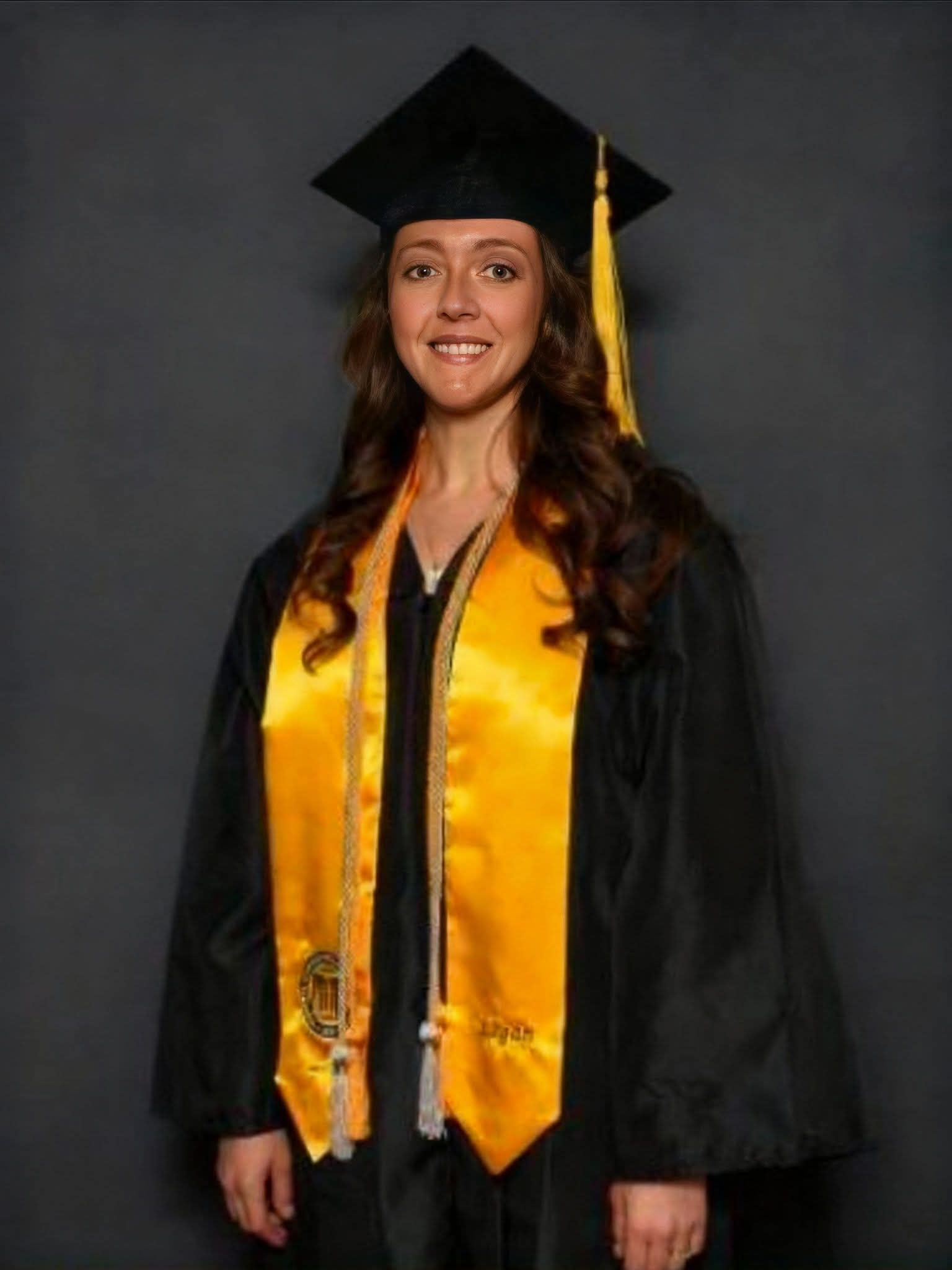
Emily Ferguson, a registered diagnostic radiologic technologist with VCU Health, entered the program after years in clinical practice. Already holding an associate degree in radiologic technology and a bachelor’s degree in music, she was drawn to a program that would continue her prior education and experience while aligning with her long-term goals.
“I was not really interested in starting from scratch,” said Ferguson, who also pursued a minor in health services. “I wanted to go to bigger and better places in health care, to give myself brighter opportunities to climb the leadership ladder and eventually attain a managerial role.”
While working full time in outpatient diagnostic radiology and raising a young daughter, Ferguson relied on the program’s asynchronous format and strong support system to stay on track. “It was really easy for me to prioritize and triage the important things and knock them out in a time frame that suited me the best,” she said. Her husband and other loved ones, she added, provided “unwavering support” as she spent late nights completing her coursework.
Beyond flexibility, Ferguson found that the curriculum immediately influenced her work, particularly courses in ethics, leadership and management. “They taught me how to be a good human with a backbone,” she said, “and with the skills to support not only my career in management, but also the people around me.”
Like Ferguson, Angela Wiseman returned to school after years in the field, bringing with her a long-held commitment to patient care – and a desire to finally earn her bachelor’s degree. A registered technologist at VCU Health orthopaedics locations in Colonial Heights and Chester, she has held an associate degree in science since 1993 and has since earned certificates in radiation sciences and bone densitometry technology.

Wiseman balanced full-time work with parenting responsibilities while navigating personal challenges. “I have always wanted to further my education, but the timing and finances were an issue,” she said. On top of her full-time job, she had gone through a divorce and was raising two children when she received an email about the degree completion program, which she said “answered my prayers.”
By taking advantage of tuition benefits available to VCU employees, Wiseman – at age 50 – found a once out-of-reach goal attainable.
Still, balancing work, coursework and family life required constant coordination. “I would come home from working all day, tend to my children and cook dinner, and I’d try to remember when assignments were due,” Wiseman said. She leaned on technology – including reminders on her phone – alongside family support and her faith to make it possible.
In May, Wiseman became the first person in her family to earn a bachelor’s degree. She hopes to use her newly acquired knowledge and skills to better advocate for patients, ensuring they “receive the best care possible by understanding their treatment options and having their rights protected.” Classes associated with her minor in psychology guided her in how to exercise empathy with patients, especially adolescents, before X-rays or related procedures.
Both Wiseman and Ferguson credit strong faculty engagement, particularly from program leadership, for helping them persist through the program. Equally important, they emphasize that the degree completion pathway is designed for real life, not an idealized version of it.
“It’s a much more attainable goal than people may think,” Ferguson said. “If you’re willing to put the hard work in, then do it. The curiosity of learning and the hope for something better at the end of it is worth investing in.”
Wiseman added, “Age is only a number, and it’s never too late to go back to school. It may seem scary and impossible to do, but it is well worth it in the end. Never, never give up.”