Jan 7, 2026
VCU OT leads hands-on lymphedema training for practitioners across Virginia
Nearly 1 in 30 people worldwide live with lymphedema, a chronic and often debilitating condition that can complicate daily activities and increase risks for infection. Yet few occupational and physical therapists receive specialized training to identify and address it early.
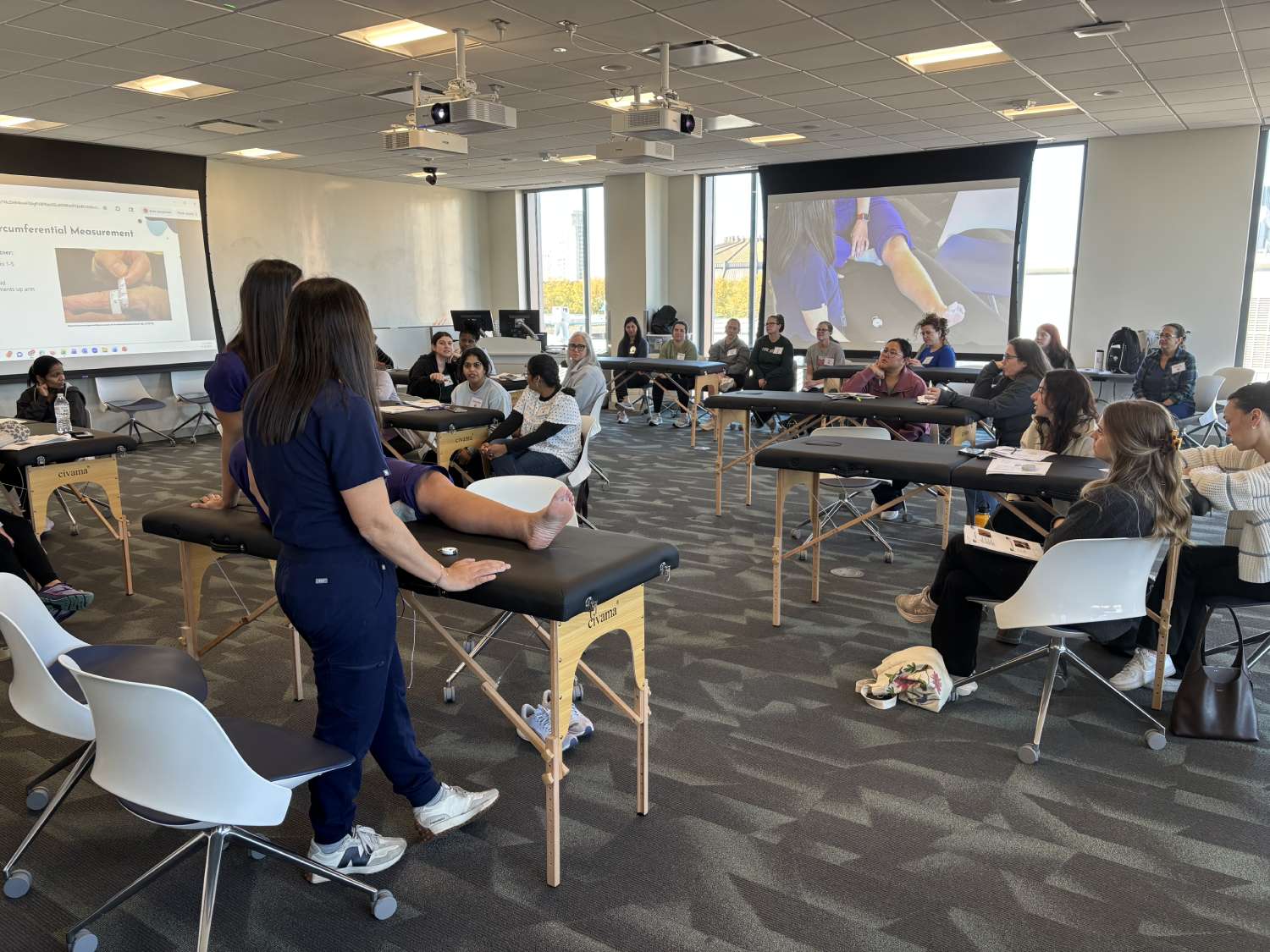
To help close that gap, Christine McNichols, Ph.D., OTR/L, postdoctoral fellow in VCU’s Occupational Therapy and Gerontology departments, led a free, one-day lymphedema training event for OT and PT practitioners on Nov. 8. Supported by a Virginia Center on Aging grant, the intensive, hands-on program aimed at strengthening statewide capacity for lymphedema care.
Lymphedema is swelling that occurs when the lymphatic system cannot adequately drain lymph, a protein-rich fluid. It frequently results from cancer treatments that damage or remove lymph nodes, but can occur in cases unrelated to cancer. Those with lymphedema may have difficulty with basic functional activities like walking, dressing or finding clothes that fit over an affected limb.
McNichols wanted to share more in-depth methods occupational and physical therapists can use with patients. These include teaching patients how to perform self-massage to alleviate fluid buildup, using adaptive equipment to help patients put on socks or compression garments and recognizing red flags that indicate the need for a lymphedema specialist.
McNichols aimed to remove typical barriers that prevent clinicians from accessing continuing education. “Coming out of COVID-19, many healthcare systems have restricted continuing education funding,” she said. “I wrote the grant so I could provide free education; I didn’t want practitioners to worry about cost.” She invited licensed providers from across Virginia, including faculty representatives from every OT and PT graduate program in the state.
Interest exceeded expectations. Nearly 50 practitioners attended, representing a balanced mix of occupational and physical therapists from diverse settings. McNichols recruited two certified lymphedema therapists to lead didactic sessions and laboratory activities: Amanda Wheeler, Ph.D., OTR/L, CLT, of Sacred Heart University in Fairfield, CT; and Stephanie Pellar, PT, DPT, CLT-LANA, of Mary Washington Healthcare in Fredericksburg.
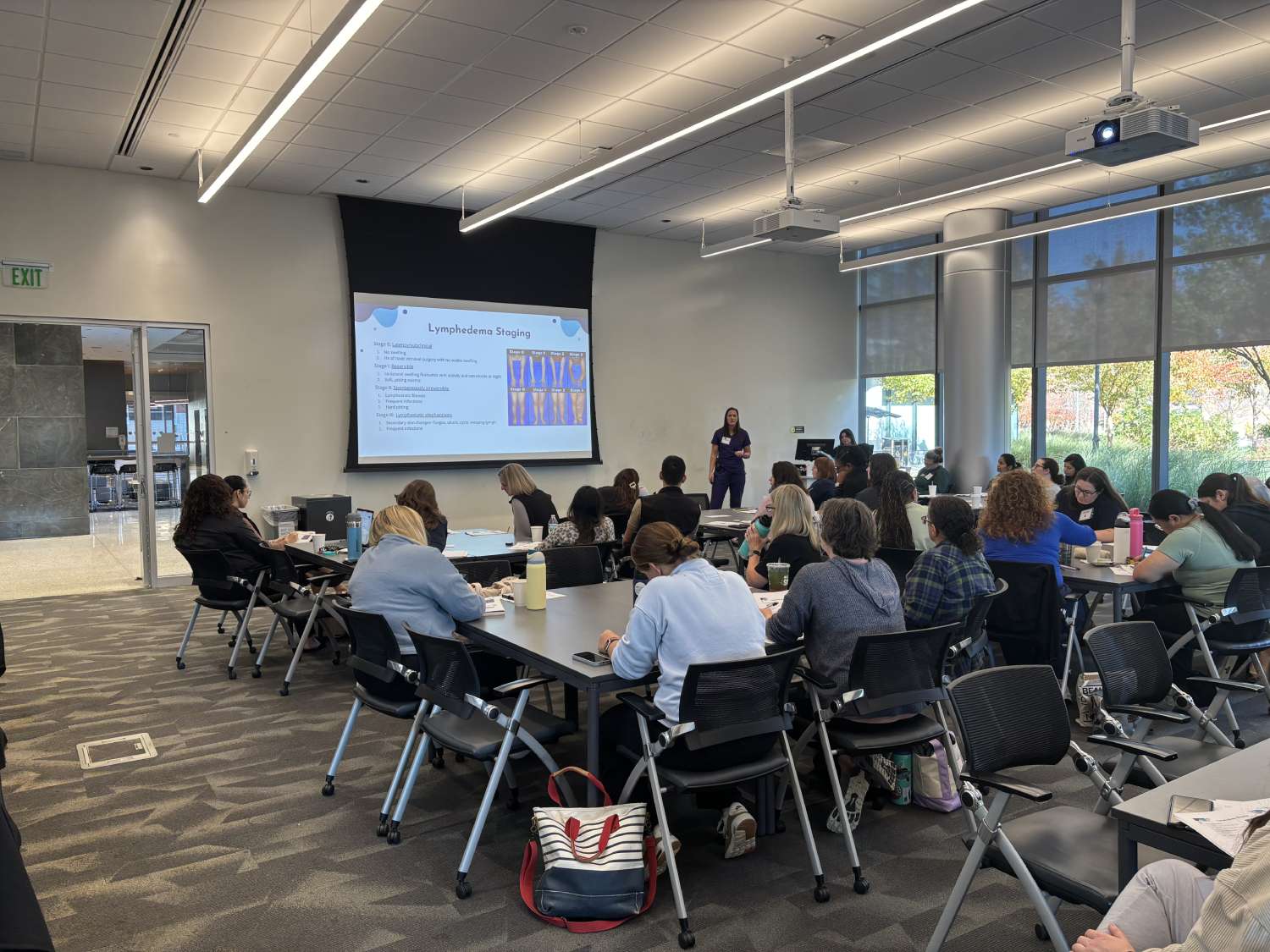
Throughout the day — which started with foundational concepts and progressed through referral guidelines and long-term management strategies — McNichols saw a notable level of engagement. “We had great discussions where participants asked questions about what they've seen in practice,” she said.
Above all, McNichols wanted to help attendees bring practical, immediately useful knowledge back to their patients, especially in communities with limited access to certified lymphedema therapists. “I feel confident that every participant had some takeaway that really resonated with them,” she said. With overwhelmingly positive feedback and a waitlist that filled within 48 hours, McNichols hopes to explore opportunities for future offerings.