Feb 19, 2026
VCU Physical Therapy students help drive amendments to Virginia health care legislation
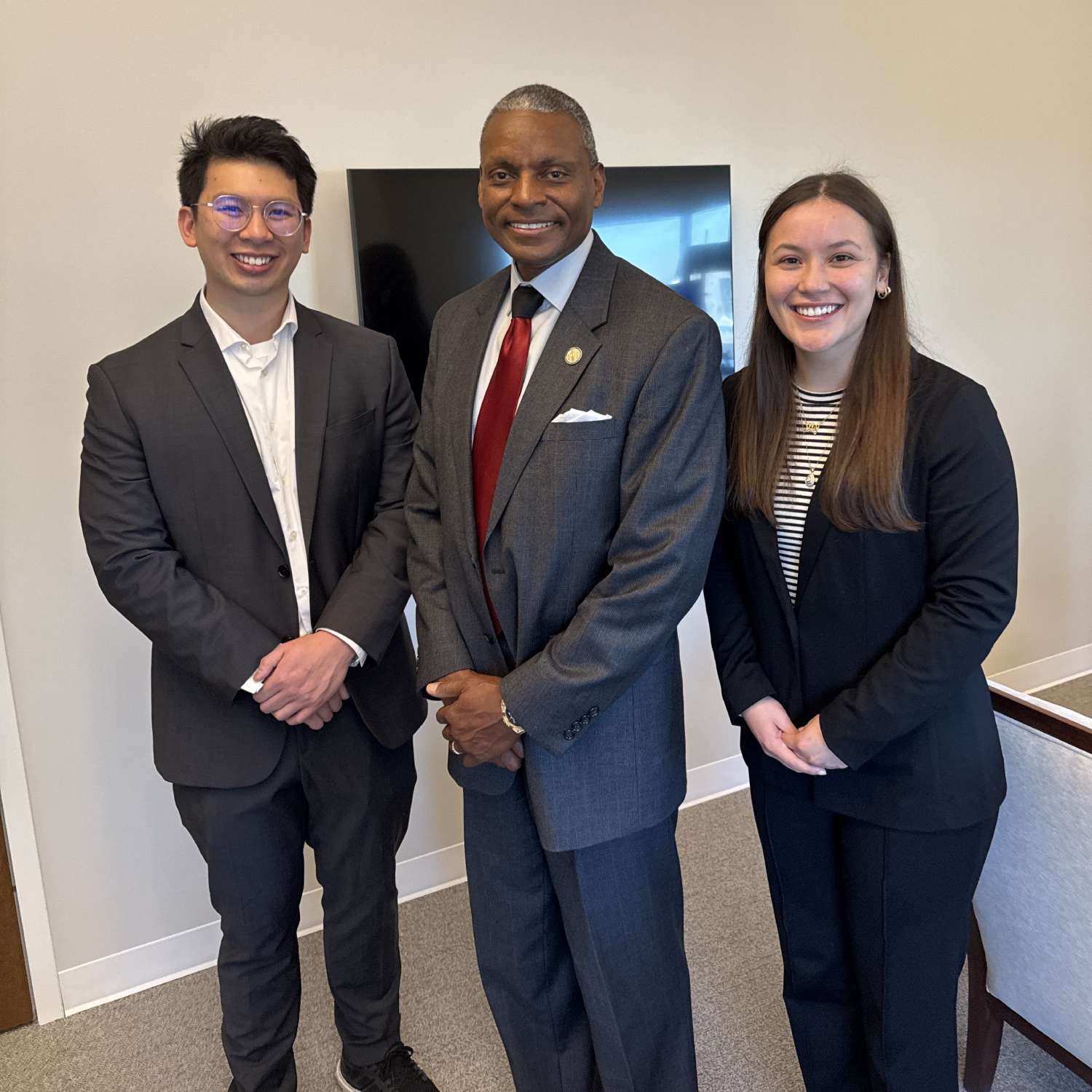
At this year’s Virginia General Assembly, two VCU Doctor of Physical Therapy (DPT) students helped push forward legislation designed to better support health care providers serving vulnerable populations.
On Jan. 21, second-year students Ally Clark and Brian Pham attended Lobby Day, an annual event organized by the Virginia chapter of the American Physical Therapy Association (APTA). It brings physical therapy professionals and students together to meet with legislators and advocate for issues affecting patients and the profession.
The two decided on a whim to reach out to Del. Virgil Thornton (D-86) through his legislative assistant, Thomas Sarsfield. Thornton’s district includes Poquoson and parts of York County and Hampton.
Clark and Pham, who both call the 86th District home, introduced themselves as constituents and future physical therapists and stated their willingness to speak or testify regarding bills applying to their profession. “We game-planned a little bit beforehand, thinking about the major issues we’re facing today,” Pham said. These included access to care, workforce shortages and the financial realities facing new physical therapists – particularly in underserved communities.
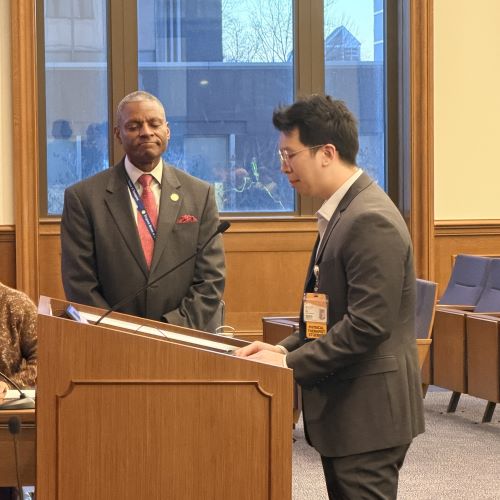
“After we went through those issues, Thomas mentioned how his team was potentially going to propose an amendment to House Bill 1123,” Clark said. About a week later, Sarsfield contacted her and Pham, asking them to testify on Feb. 2 before a house subcommittee on the bill. The students worked closely with APTA Virginia’s legislative team to prepare for the early-morning hearing.
HB 1123, as first introduced, proposed a state income tax credit for certain health care providers who work a minimum number of hours in medically underserved areas in Virginia. The bill touched on virtually all of Clark and Pham’s shared passions, with one critical caveat: Physical therapists were not included among the eligible providers.
“The cost of education is high, and the return on investment once physical therapists enter the field isn’t very favorable right now,” Pham said. “Bills like HB 1123 are designed to draw health care workers to underserved areas even though they’ll likely make less money there. So why shouldn’t physical therapists be included in that?” He added that the bill is also designed to motivate people from these underserved areas to become health care workers themselves.
Both students are motivated by their personal experiences with limited access to care. Pham, the son of two immigrants who grew up in a low-income household, saw family and friends “tough out” chronic pain and other medical issues because they couldn’t afford to seek out the help they needed.
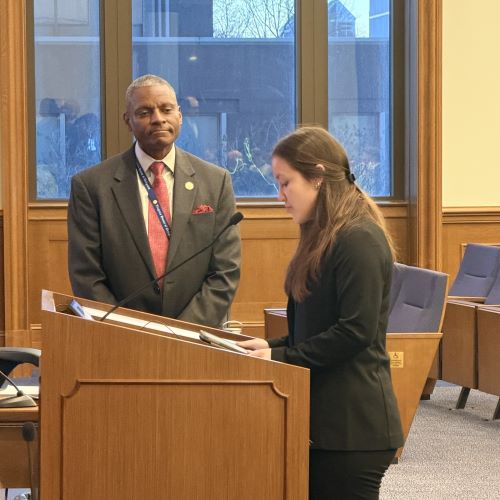
Clark’s parents specialize in social work, which has exposed her to disparities related to race, income and other factors since an early age. “When you’re not getting the care you need, your quality of life isn’t going to be the highest it can be,” she said. “People may not think physical therapy services are necessary, but they truly are impactful in people’s lives. Right now, there just aren’t enough providers who are going to underserved areas to care for the people there.”
Although HB 1123 was ultimately tabled due to budgetary constraints, Clark said the two students encountered “a lot of positive support for the bill” and hope to return as advocates if it’s reintroduced in the future. Planned amendments now include physical therapists among the eligible providers, explicitly recognizing the role they can play in addressing Virginia’s health care shortages.
For Clark and Pham, the experience underscored the power of preparation, persistence and speaking up. “We have a lot to gain from legislative changes like this,” Pham said. “More push for policy will open the door for what we and our peers can achieve going forward.”
“What really matters is that you take the chance and you make your voice heard,” Clark said. “Why have a voice if you’re not going to use it?”